3D scan your meal.
Know your carbs.

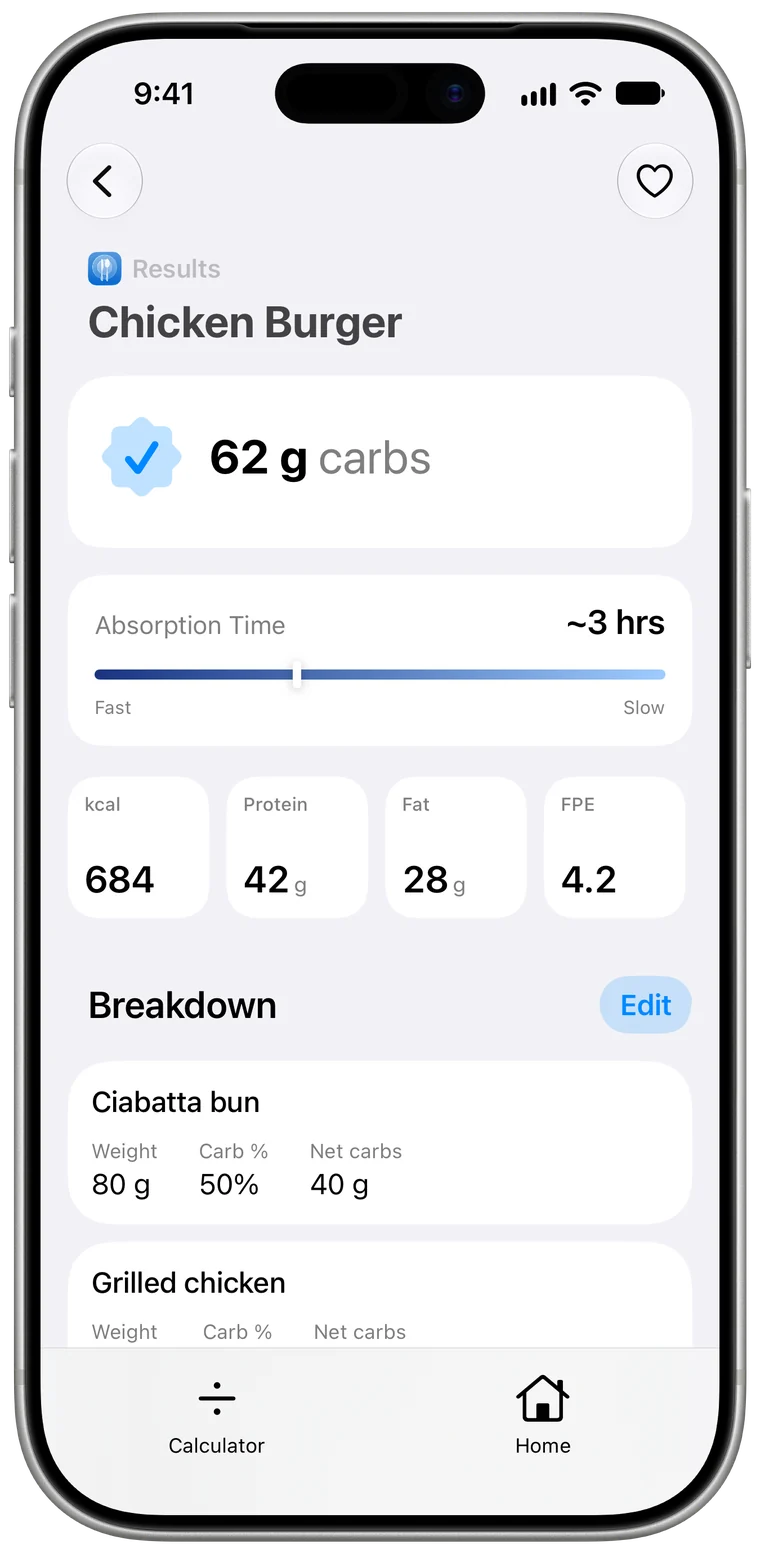
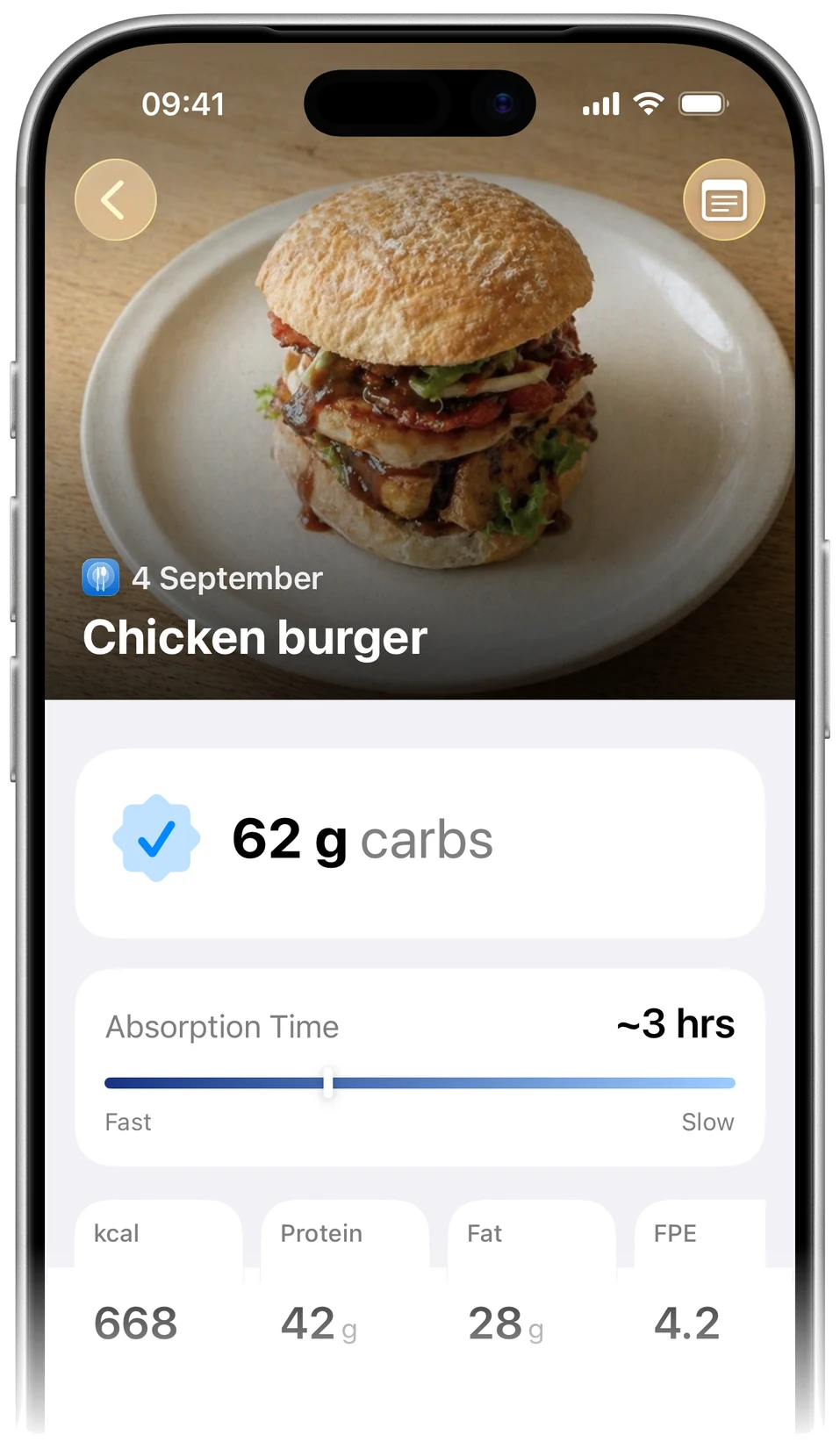
Carbetic result: chicken burger with 62 g carbs, absorption time about 3 hours

The best app for carb counting.1

CarbeticCarbetic
Calorie tracker apps3
Advanced 3D food recognition2
Carbs and absorption time
Recipe analysis
Advanced privacy as standard
Clinical studies on accuracy4

Get to know Carbetic.

3D scan.In 5 seconds.

The result:Carbs.Absorption time.Fat.Protein.Calories.Fibre.

Carbetic result: chicken burger with 62 g carbs, absorption time, nutrients and breakdown per ingredient

Free accessfor healthcare professionals.

Recommendedand featured.

Österreichische Diabetikervereinigung Aktive Diabetiker Austria Diabetes-Engel DIA KOMPASS Diabetes Selbsthilfe Vorarlberg Zuckerjunkies DER STANDARD brutkasten 17. Wiener Diabetestag 2024

Important note: Carbetic is not a medical device. Never use it for treatment decisions.

Questions?
Answers.

Carbetic is an app for counting carbs. It estimates the carbohydrates in a meal via 3D scan, recipe analysis or voice input, and also shows absorption time, FPU (fat-protein units), calories, fat, protein and fibre.

The scan measures the meal spatially from three perspectives and derives the volume and weight of the ingredients. It is not 100 percent exact, but for many it is considerably more accurate than plain guessing. LiDAR detection is available on select devices and can further improve accuracy.

The key difference is accuracy. It is what makes a carb estimate truly useful. Carbetic combines AI with mathematics and real measurement data, making the app considerably more accurate than ordinary AI tools or calorie counter apps.

A general-purpose AI chatbot usually estimates a meal from a single photo. Carbetic measures it. Examples of why Carbetic is more accurate:

3D reconstruction instead of a single photo. Carbetic builds a 3D model of the meal from three captures. This yields the dimensions and volume of each component. Volume times density gives the weight, and the app calculates the nutrition values from that.

Vetted nutrition sources. The Carbetic database combines several reference databases: FoodData Central from the U.S. Department of Agriculture (USDA), manufacturers' nutrition data, official websites and other vetted sources. For each food, Carbetic uses the most suitable source: average values for generic items such as a burger bun, and the chain's official data when available.

Smartphone sensors. On devices with a LiDAR depth sensor, Carbetic includes its measurements when they improve accuracy. The gyroscope records the device's orientation and tilt for every capture. Carbetic also derives a coarse location, such as the country, from the IP address, because fast-food menus and recipes vary from country to country.

On top of that come an interface built for logging meals quickly rather than a chat thread, plus recipe analysis and voice input.

Source: U.S. Department of Agriculture, Agricultural Research Service. FoodData Central, 2019. fdc.nal.usda.gov

You can try Carbetic for free. After that, the subscription is $4.99 a month (€4.99 in the eurozone). Anyone who cannot afford it receives lifetime free access with a note from their doctor. Verified healthcare professionals use Carbetic for free.

No. Carbetic is a tool for estimating carbohydrate content and not a basis for treatment decisions.

For everyone who wants or needs to count carbs. At home, at restaurants and on the go.

Yes. At the Medical University of Vienna and Klinik Landstraße, a Vienna city hospital, two clinical studies are currently examining the app’s accuracy; a third is in preparation. Official results are not yet available.